Showing posts with label Christianity. Show all posts

Wednesday, April 2, 2014

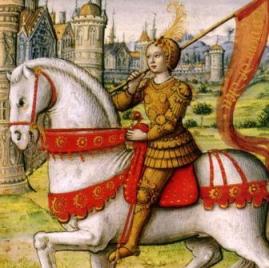
Joan of Arc

NOTE: I'm out of the classroom today, but Mr. Morris is going to teach you some fantastic information about one of the coolest ladies ever, Joan of Arc.

Journal: click here for journal prompt

Main idea: Joan of Arc was a young French peasant who led the French army to victory in the Hundred Years War.


Then students took their own notes throughout the lesson. Important points to consider:

  • Born in Doremey, France in 1412.
  • Believed she was visited by God with visions on how to lead the people of France to victory 
  • led successful military campaigns and which lead to Charles VII being crowned King of France.
  • captured and tried as a heretic by the English. She was burned at the stake. She was never allowed to confess and was possibly poisoned during her time in prison. She was 19 when she died.
  • She was originally charged with 70 crimes, including wearing men's clothing. 
  • She couldn't read or write.
  • 25 years after her death, the pope declared her innocent.
  • Made a saint in 1922. 
  • known as "The Maid of Orleans"
If you were gone: 
watch this biography (28 mins) and take notes.

Wednesday, March 19, 2014

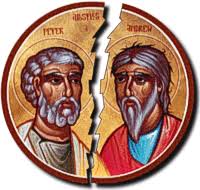
Another Schism?!

Students - I am out of the classroom today, but Mr. Morris will be teaching the material. If you are gone, as I know many are, please take copy of the notes, click the link for the left side activity and watch the videos down at the bottom of the page. Happy Spring Break, if I don't see you Friday!


MAIN IDEAS AND WWK:
Main Idea:  The Catholic church lost power in the 1300s after being challenged by kings. The Church split for 39 years and never regained its former power afterwards.

Schism--split due to difference of beliefs
Pope Boniface--commands French king Philip IV to stop naming his own bishops (lay investiture)
Papal Bull--an order from the Pope that must be obeyed

What happens:
Philip arrests and imprisons Boniface, who dies
Philip names new pope and moves the church to Avignon, France.
Another pope is selected in Rome.  There are now two popes.
1414:  Council of Constance:  All three popes fired and a new one is named.

New men disagree with Church:
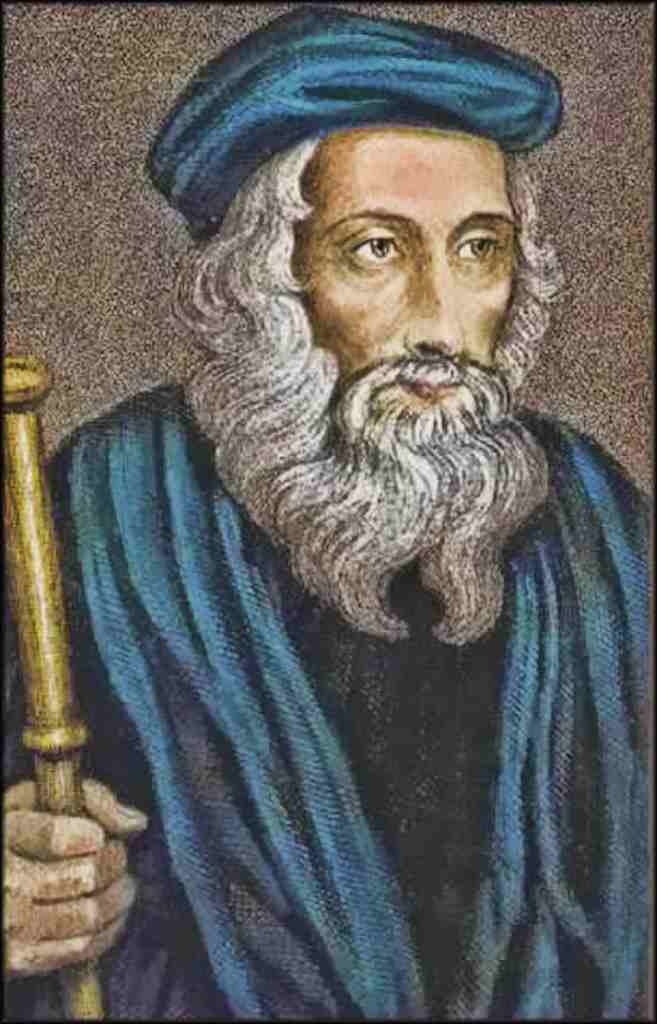
John Wycliffe--Englishman.  Believes humans only need Bible to get to heaven. Translates the Bible into the English vernacular.
John Huss--Czech priest who agrees with Wycliffe.  He is burned at the stake for heresy.

Left side:
Please print the following foldable on one sheet of paper (both sides are used) OR print into two and paste into notebook in an alternative way. Follow the directions and color the map.


If you were gone, watch the videos: 
Western Schism (4 min) (shows the map for the left side!)
Jan Huss, Wycliffe, and the Papal Schism (15 min)

For the WORLD FAMOUS, LAUGH TIL YOUR EYES WATER MME by our very own Mr. Morris, click here.


Monday, March 17, 2014

Shamrock and Roll!

Happy St. Patrick's Day!!!


Daily Objectives:
  • Journal (click here)
  • St. Patrick's Day Trivia
  • KWL CHART for notes
  • N. Ireland Music and Murals
  • Left side: WORD WALL - St. Patrick (use your new knowledge!)
  • Work on Stained Glass Activity
In class, we'll be talking about St. Patrick, the myths and truths of the holiday, and some Gaelic sayings!

We'll also take a few minutes to learn about the research I will be presenting in April about Irish protest music and the Troubles in Ireland.

For notes, we're trying a KWL chart. For those of you who have not done these before, you write out the first two columns before learning the material. Then fill in the last column after learning. These help you realize what you know and didn't know! Please fill in 3-5 points for each column. I have a sample KWL below:


For the MME presented in class, visit this link.

Saturday, March 15, 2014

Stained Glass Project

Stained Glass Activity
Morris / Donnelly World History


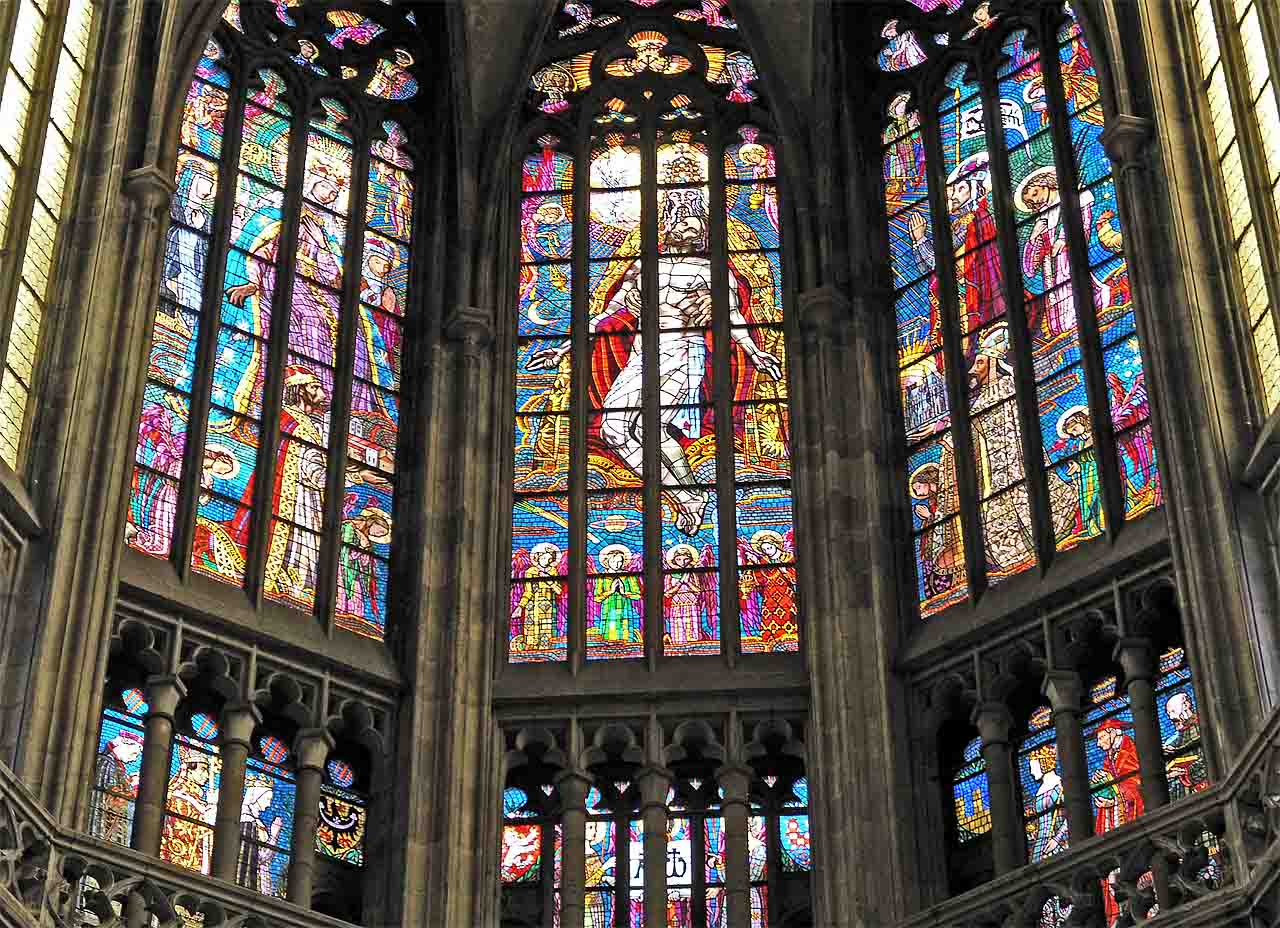
During the Middle Ages, few books existed.  Most people could not read or write.  For many, the Church was the center of teaching and religious education.  The stained glass windows served as textbooks for religion, history, and other stories of everyday life.  Imagine you are a stained glass window craftsman.  Tell a story of your life, your country, your school year, the seasons, or other activity that is important to you.  You are also free to tell a Biblical story, including any story from any scripture you use in your own life.  You have two options of shapes. For the template, look at the window as if it were a clock.  Start your story at the position that would be one o’clock and end the story at the position that would be eleven o’clock.  Use the center for other drawings that add to your story or that tell the overall theme of your story. You
may use another stained glass window shape, with permission.

RUBRIC: (20 points total)
- Telling a visual story - 5 points
- Creativity - 5 points
- Color and Ink (black "lead" lines) - 5 points
- Neatness - 5 points

Note: the printed copy of the rubric says the project is 40 points. That was changed in class and the assignment is worth 20 points.

DUE DATE: Weds. March 19.

You will receive some time in class to do this project, but you may need to work on it at home.
Some modern windows:


For a video on how to make stained glass, click here.
For a video on the history of stained glass, click here.
For my MME used in class if you were gone, click here.

If you need a template: 
This is similar, but more complicated than the one given out in class. You can google other templates or ask me for a copy.


Thursday, March 13, 2014

Cathedrals: Bibles of Stone

Daily Objectives:
  • Journal (click here for journal)
  • Word Wall and Review
  • Cathedral MME and notes (MME link posted after end of school day.)
  • Video and drawing a diagram - round vs. pointed arch? 2 other differences between the two?
MAIN IDEA: In the Middle Ages, giant churches called Cathedrals were built to honor god.
Words worth knowing
       Cathedral:  a large church, home to a bishop. Housed holy relics.
       Relic:  a piece of a saint or other sacred object
       Stained Glass:   picture stories from the Bible and church history
       Romanesque Architecture:  early cathedral -short, squat, small windows and heavy walls.
       Gothic Architecture:  tall, graceful churches with large windows and narrow supports, made possible by buttresses.
       Flying Buttresses:  an external support that holds up a wall.
       Gargoyle:  a stone statue on the outside of a cathedral.


Left side activity: Watch this video about the difference between Romanesque and Gothic Cathedrals. For your "left side activity," draw and label the different types of arches used in these cathedrals. List at least two other differences.
Think you've got it down? 
Take the Romanesque vs. Gothic quiz to test your knowledge! These pictures are taken in High-Def by a photographer Trey Ratkin.


For the MME in class in case you were gone or need to review: Click here.

Wednesday, March 12, 2014

Problems in the Church

 Daily Objectives:
  •  Journal: click here for journal prompt!
  •  Review 
  •  Church Problems Notes and MME
  •  Spider graph: organize the notes into your own categories. What were the problems of the Church and how were they solved?
Main ideas:
 People felt that the Church was becoming too focused on money and power. They looked for better ways to be faithful and not betray the Church.
 The Charter of Cluny removed kings from religious decisions.
 Words worth knowing:
 Monastic Movement:  Many, led by Benedict, moved to monasteries and convents to live lives that were more like the life lives by Jesus.
 Monastery at Cluny, France:  where the church reform movement began.  Tried to get the church and its followers to be more Christ-like.
 Francis of Assisi:  Italian monk who gave up everything to serve the poor and others in need.  Formed the Franciscan Friars.
 Friars:  a new kind of monk who lived in towns with the people rather than in a monestary, and helped the poor, the sick, orphans and others.
 Problems in the Catholic Church
­Simony--the buying and selling of church positions. Anybody could be a church official, even if he was a bad person.
­Married priests and/or priests fathering children.  Priests were sworn to be celibate (never marry or have sex)

Lay Investiture:  when a king names his own bishops.  King did not name holy men, instead named men he could control.

For the MME in class if you were gone or need to review: click here.

Wednesday, March 5, 2014

Review time!

Daily Objectives:

If you were gone: 
Please print the review sheet and use your notebook to fill it in! All information should be contained in your notebook or on your Crusade foldable.

Test Review: Feudalism to Crusades

Rise to Feudalism

·         Define feudalism.
·         The feudal system was caused by people’s need for _____________________.
·         Define or describe a feudal lord. Vassal? Knight? Peasant? Serf?
·         Be able to draw and label the feudal pyramid.
·         The land given to a vassal by the king is called a _______________ or ____________________.
·         How did feudalism benefit the peasants?   How did it benefit the vassals?  How did it benefit the king?  How did it benefit the Catholic Church?
·         What is a tithe?
·         What is the difference between a peasant and a serf? BONUS: The peasant was also known as ____________. The serf was also known as_____________.

Life on the Manor

·         Describe a feudal manor. Name at least 3 parts of a feudal manor.
·         Describe planting on the manor. Number of fields? Who owned the land?
·           Define Fallow. Why was it so important?
·         How are a manor and a fief different?
·         What is one building on the manor that every single person used and why?

Church Life

·         Who were the clergy? What did they do?
·         How did people achieve salvation? What is salvation?
·         Define Canon Law. Why was this important in the Middle Ages?
·         Who was Gregory VII? Who was Henry IV? What happened at Canossa?
·         _____________________________________ was a ceremony where bishops were given their symbols of office.
·         Be able to draw the hierarchy of the Church.

Castles

·         What was the purpose of a castle?
·          The first castles were called ___________________________. Later castles were called _____________________________.
·          What is a keep?  Moat?  Crennulations?  Arrow Loops?  Murder Holes?  Describe at least 5 parts of a castle.
·         What is a siege? 


Knights and their Ladies

·         At age 7, _______________________ began training to become knights. At 14, ___________________________________ traveled with knights to jousts. Finally, after about age 21, ____________________________ were highly trained, mountain warriors.
·         Define Courtly love. Why is it so important to today’s ideas of love?
·         How did knights practice their skills?
·         What did knights wear? Name 3 pieces of a coat of arms.
·         ______________________________ was a code of conduct and honor that also helped improve _______________________________.  
·         Define Troubadour.

Causes of the Crusades

·         The word “Crusades” comes from the word ________________________.
·         If you went on a pilgrimage and traveled long distances, what happened?
·         What was the main reason for the Crusades?
·         What was the Holy Land? Why was it important to Christians?
·         The _____________________________ in _____________________________ sent a message to Western Europe for help against the Muslims.
·         Pope _________________ called for the Crusades and yelled to the crowds “______________________.”
·         What did Crusaders wear that made them easy to identify?
·         Name 5 causes of the Crusades. (Use your foldable!)

Crusader Showdown

·         The first four Crusades lasted from _______________ to _______________.
·         What is the difference between Muslim and Islam? Who is their prophet?
·         Who was the famous Muslim general? What did he do?
·         Define Reconquista. What happened?
·         What happened in the first Crusade? Second Crusade? Third Crusade? Fourth Crusade?
·         What was the Children’s Crusade? What happened to the kids?
·         Who won in the Crusades? Who lost? Why do you think so?

Effects of the Crusades

·         What happened to the relationship between East and West after the Crusades?
·         What were good things from the Crusades? Bad things? Name at least 5 effects of the Crusade (Use your foldable!)
·         How do the Crusades impact life in the East and West today? Why should we study the Crusades?

Tuesday, March 4, 2014

Effects of the Crusade

Daily Objectives

  • Finish any Crusade Showdown Notes
  • Discuss effects of the Crusade
  • Create a foldable study guide for the test on the Crusades - this will have to be made up in class. 
Main Idea:  The Crusades had both good and bad results, none of which were intended.

Words Worth Knowing
1.  Moor--a Spanish Muslim

2. Cordoba--important Moorish city in Spain
3. Al Hambra---famous mosque 

Effects of the Crusades
1. Feudal lords lose power
2. Catholic Church loses power
3. Trade increases between Europe, Middle East and Africa
4.  Many knights and others die
5. Byzantine Empire does not trust Europe any more
6. Muslims do not trust Europe any more
7. Power of kings increases
8. Tolerance for Jews and Muslims decreases
9. Italian city-states become wealthy
10. European technology improves thanks to contact with Muslims

Map showing Muslim Spain before the Reconquista


Monday, March 3, 2014

Crusade SHOWDOWN

Daily Objectives:
MME: Review and New info
Notes and Foldable
Coat of Arms DUE: March 4
Trimester Projects Due this week!

Main IdeaThe Crusades were holy wars between European Christians and Middle Eastern Muslims that have caused distrust ever since.
Crusadeswars between 1096 and 1204 to free the holy land.
Pilgrimage a journey to a holy place to receive forgiveness of sins.
Holy Land:   the land in the Bible where Jesus lived and taught.  (Now Israel)
Pope Urbancalled for Crusades to free the Holy Land
Muslims:    followers of Muhammad who lived in the Holy Land
Islam:   The religion of Muhammad, believers in the same God as the Jews and Christians
Saladin: respected Muslim leader who defeated the Crusaders 

Reconquista: non-Christians were forced out of Spain
We also did a notes section for the foldable tomorrow as a left side activity. See me in class for handout.
If you're gone: watch these two videos on the Crusades and take notes for who what when where and why on each of the Crusades.
Crescent and the Cross, Part Two

Saturday, March 1, 2014

Causes of the Crusades

Daily Objectives:


  • Journal (click here for journal topic.)
  • Reading assignment - you will need to use textbook for this assignment. See me in class about this.
  • MME on Causes of the Crusades
    • NOTE: The main ideas and words worth knowing will be added to Monday's notes as we focused on the reading assignment in class. 
  • Left side: 
    • Create a Venn Diagram. Compare a knight preparing for the Crusades with a modern American soldier preparing for war. (3+ points in each section)
  • Reminders:
    • Trimester Projects are due! Please make plans to present your project in class, about 3-5 minutes.
    • Honors students: Book projects are due! Please make plans to present your book in class, about 3-5 minutes.
    • Coat of Arms project and writing assignment: due Tuesday, March 4.
    • Exam: Friday, March 7th. Feudalism through Crusades.
In order to get the blog to load faster, I am posting MME's a bit differently - 

Causes of the Crusades: 

1.  Holy Land controlled by Muslims and the worry that Muslims would not let Christians make pilgrimages to the Holy Land
2. Constantinople (Eastern Roman Empire) asks west for help against Muslims.
3.  Troublesome knights in Europe threatening the people and the church.  Sending on a crusade would get rid of them.
4. Landless younger sons.  Younger sons could not inherit land.  This way they could seek their fortune in the holy land.
5. Adventure
6. Forgiveness of sins
7.  Merchants wanting wealth


Wednesday, February 19, 2014

Church, Power, and Politics

Daily Objectives:


Main Ideas:
The medieval church had a system of status similar to feudalism.

Church and political leaders continued to fight for authority and power.

Words Worth Knowing:

        Clergy: religious officials such as priests, bishops, cardinals, and the pope
        Sacraments: religious ceremonies to help people reach salvation
        Canon law: the laws of the Church which all Christians must follow
        Lay investiture: ceremony where clergy were appointed by kings
Pope Gregory VII: banned lay investiture to get more power from king
        Henry IV: Holy Roman Emperor who tried to get Pope to step down and waited in snow for 3 days to be forgiven
        Concordat of Worms: compromise between Church and Emperor about lay investiture (1122)

We watched this video in class which should help you understand the controversy between Pope Gregory and Henry IV. Lay Investiture Swing

Left side: Draw the Hierarchy of the Church


Notebook Rubric: 

25 points: finish any incomplete or missing pages from last notebook check. If you have none, good job! You've earned these points already!
5 points: Table of Contents and Page numbers updated and complete
30 points: Right Sides Completed
             BOTH SIDES Titled
             Daily Objectives
             Notes Complete
             6 Journals (including Oath of Fealty worth extra points as assignment!)
15 points: Left sides completed 


Friday, February 14, 2014

Happy Valentine's Day!

Daily Objectives and Announcements -
  • There is a journal for today! Click here to view.
  • REMINDER: Trimester Projects are coming due!!!! Don't leave your presentation until the last minute!!!
  • We're taking the day to learn about the history of Valentine's Day! There are a few notes and they might be on the test.... so don't forget to put them in your notebook!
  • Left side activity: Facebook Profile Page on Valentine, Eros, or Cupid (see me for page!)
Main Idea:
Valentine's Day originated as a Roman holiday and is named after a martyr named Saint Valentine.

Words Worth Knowing

Saint: a person recognized as virtuous or holy in Catholic Church. Usually martyred.

Martyr: a person killed because of their beliefs
Feast day: holiday recognized by the Catholic church to celebrate the life of a saint. 

Lupercalia: holiday for Roman god Faunus, who was the God of farming and fertility

We also watched a short video.


Check back later for the MME!

Saturday, February 1, 2014

The Dark Ages

Back to the West and the Dark Ages...

Daily Objectives
  • Multiple Intelligence Survey (Left Side: Graph) - this is to indicate what type of learning styles best fit your needs.  Then you can use these types of strategies more often in your notebook
  • Dark Ages - each class stopped at a different point in the MME.
  • Left side: Choice! Spider graph or word wall.
Main Idea
The Middle Ages began after the fall of Rome and ended during the Renaissance (500-1450). During this time there was less learning, more fighting, and people started speaking different languages. 

WWK

Medieval:  means the same thing as Middle Ages
Middle Ages: time period between Roman Empire's fall and the Renaissance.
Dark Ages: the beginning of the Middle ages; dark because it was a hard period to live in due to lack of education and food.
Germanic Tribes: groups that invaded and re-settled Europe. Couldn't read or write, but they had a strong oral tradition.
Dialect: the way a person speaks changes based on location of community.

Here are some documentaries if you're interested about several of the barbarian groups...


Also, here's the MME from class. Please review it!

Tuesday, January 28, 2014

The East - West Schism

The East West Schism (Jan. 29th)

Daily Objectives:
Main Ideas:
  • The Church divided into the Roman Catholic and Eastern Orthodox Churches in 1054.
  • The pope of the Roman Catholic Church played a greater role in government in the west than the leader (patriarch) of the Eastern Orthodox Church played in the east.
     Words Worth Knowing (WWK)

§  Schism - a split caused by differences in opinion or belief
§  Eastern Orthodox Church – based in eastern Constantinople, Greek language (or other), patriarch, icons. Orthodox means “holding established beliefs.”
§  Roman Catholic Church – based in Rome and Europe, Latin language, pope, no icons allowed. Catholic means “universal.”
§  Icon – a religious symbol used for worship.
§  Patriarch – leader of Eastern Orthodox church, works with bishops under emperor
§  Pope – leader or Roman Catholic church, above bishops and emperor

§  Cyrillic alphabet – alphabet developed in Byzantine to translate Greek religious texts to Slavic speaking people. Still used in Russia.


Resources

For a podcast on the Schism from a religious historian here.
For the Metropolitan Museum of Art's webpage of religious icons and history, visit here.
For an example and history of the Cyrillic alphabet, click here.